
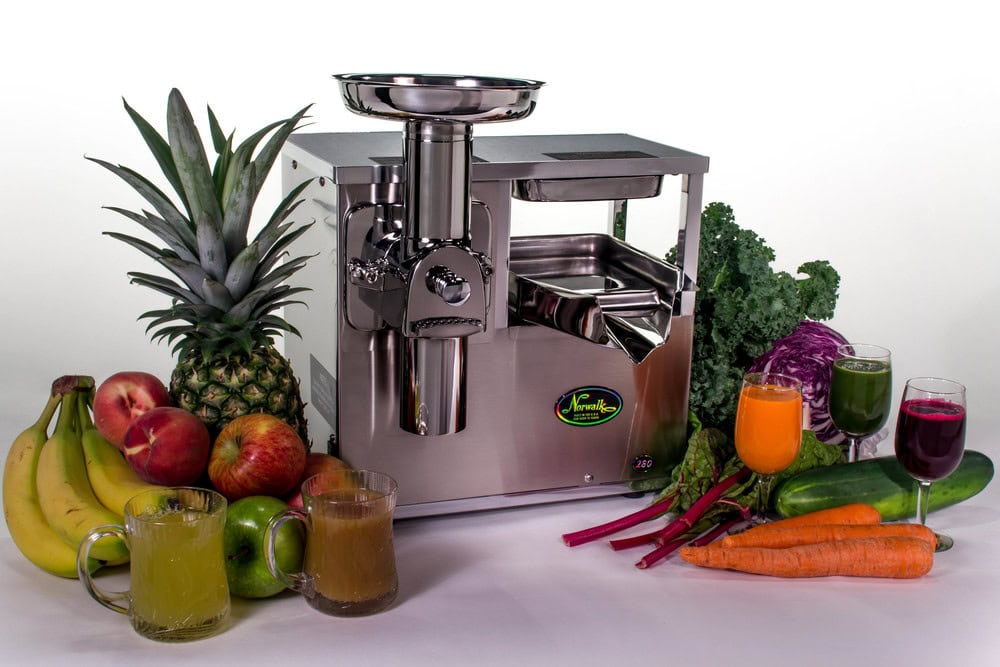
If you have been around serious cold-pressed juice circles long enough, you have heard the Norwalk Juicer name spoken with a certain respect. For decades, the Norwalk hydraulic press system was considered the gold standard for high-yield, low-heat, nutrient-forward juicing.
But there is a twist in the story.
A quick note on the company’s current status
Multiple industry sources report that the Norwalk Juicer Company has shut down operations. Goodnature (a commercial juicing equipment company) wrote that they received confirmation from Norwalk ownership that the business had closed “for good” (update dated Nov 22, 2021). Pure Juicer also published a statement saying the Norwalk Juicer Company “closed its doors” after 87 years.
Some repair and parts providers describe the closure as happening later (for example, “late 2022”), which likely reflects the long wind-down period and service ecosystem that continued after manufacturing stopped.
Either way, the practical reality for Ghana is this: Norwalk is now a legacy machine, and buying one today is a decision you make with maintenance, parts, and support in mind.
What the Norwalk actually is (and why it is different)
The Norwalk is not a typical “all-in-one” slow juicer. It is a two-stage extraction system:
-
Grater stage: produces a fine pulp (very consistent)
-
Hydraulic press stage: squeezes pulp under pressure to extract juice with minimal heat and oxidation
This two-stage approach is why Norwalk juice tends to have:
-
very high yield (especially on fibrous produce and leafy greens)
-
clean separation, less foam, less air
-
a premium mouthfeel that is hard to fake with cheaper machines
If you are building a premium cold-press brand in Ghana, the Norwalk style of extraction is what customers describe as “this one be real juice”.
Why the Norwalk matters in Ghana specifically
In Ghana’s juice business ecosystem, most beginner juicepreneurs start with:
-
blenders
-
sieves or cloth filtration
-
sometimes a single auger “slow juicer”
That approach can work for volume and for pineapple-led blends, but it usually struggles when you want to produce:
-
premium green juices
-
ginger-heavy functional shots
-
higher-margin detox lines
-
products that stay stable and “fresh-tasting” longer
This is where the Norwalk earns its reputation. It makes high-integrity juice easier to standardise.
My hands-on view (from real use, not theory)
I have been privileged to have used the Norwalk extensively for juice, so take it from me when I say:
-
The grater produces pulp consistency like none other, very smooth. This guarantees you a consistent taste when coupled with proper measurements and standardised mixing for juice blends
-
The press cloth that the Norwalk juicer comes with, is very efficient, but overloading it will result in a pulp explosion, so the rule of thumb is to fill it about halfway.
-
By design the Norwalk exerts a lot of force and this extracts all the juice out of your fruits. You are getting close to about a 98% juice extraction rate. The only other juicer that does this is the Pure Juicer. Read about the Pure Juicer here.
-
Cleaning the Norwalk is very straightforward, the grater part comes off, and the plate that holds the pulp bag also comes off. The Norwalk juicer is made of very high quality food-grade stainless steel. Not taking your time to properly clean the juicer after use will leave bits of fruit and vegetables that can contaminate your next juicing session. Always make sure all bits of produce are thoroughly dislodged and washed off.
Pros of the Norwalk Juicer for Ghanaian juicepreneurs
1) Premium yield and quality
For leafy greens, fibrous produce, and structured formulations, the yield is often noticeably higher than many consumer-grade machines.
2) True cold-press
If you want to charge premium pricing, “hydraulic press cold-pressed” is a stronger story than “slow juicer”.
3) Better product consistency
Once your workflow is disciplined, your juice becomes repeatable. That is where brand trust comes from.
4) Great for high-margin product lines
Think wellness shots, detox blends, green juices, and niche health customers. Those customers care less about cheap price and more about effect and quality.
Cons and real-world constraints in Ghana
1) Availability and support risk
Because Norwalk manufacturing appears to have stopped, you are buying into a legacy ecosystem. Reports of closure are well documented. Parts and service still exist through third parties, but that introduces shipping, delays, and dependency. Getting local talent to troubleshoot and replace worn-out parts can be a headache, but I managed to find someone who could do that for me.
2) Import cost and shipping headaches of the Norwalk Juicer
Getting a Norwalk into Ghana can cost more than the machine itself depending on shipping method, weight, duty, and clearing.
3) Power and electrical considerations
Many US-market machines are 110V. That means you may need a proper step-down transformer and stable power protection to avoid damage. If you do not plan for this, you will suffer.
4) Workflow intensity
Norwalk is not a “press one button and go” system. It demands:
-
disciplined prep
-
press cloth management
-
cleaning routine
-
patience
If your business model is beverage catering volume, one machine can become a bottleneck unless you build a structured production line.
5) Not beginner-friendly for mass-market pricing
If your customers are extremely price-sensitive, Norwalk-level cost structure can squeeze margins unless you position premium correctly.
Who should consider a Norwalk Juicer in Ghana?
A Norwalk (or Norwalk-style two-stage press) makes sense if:
-
You are building a premium cold-press brand
-
You want to sell higher-margin functional juices
-
You have corporate or high-income customers who pay for quality
-
You are ready to run a disciplined production workflow
-
You can handle parts sourcing, shipping, and maintenance planning
It is less ideal if:
-
Your business is pure volume on low margins
-
Your market is mainly “cheap and plenty”
-
You do not yet have workflow discipline or staff training systems
My advice to Ghanaian Juicpreneurs
If you are going Norwalk, do not sell it like a machine. Sell it like a standard.
Your messaging becomes:
-
“hydraulic press cold-pressed”
-
“higher yield, cleaner juice”
-
“premium wellness line”
-
“crafted for serious health customers”
That is how you protect your price and justify your investment.
Your Next Steps
1) Get the full framework: Juicepreneur Blueprint
If you are serious about scaling beyond trial-and-error, you need more than a juicer review. You need the full system: pricing, margins, compliance, production workflow, packaging, and sales.
Download the Juicepreneur Blueprint and build this business with structure, not vibes.
2) Want help choosing the right equipment for your model?
A Norwalk is not for everyone. The right machine depends on your target market, pricing, volume, and production model.
Book a One-on-One Consultation and let us map your equipment plan to your business model, so you do not waste money.
3) Join Juicepreneurs Connect
If you are building in Ghana, you need a community that understands our realities: seasonal supply, pricing pressures, FDA processes, and production constraints. Learn from the experience of others and be part of a tthriving community.
Join Juicepreneurs Connect and grow with people who are actually doing the work.
For new juicepreneurs, I have put together what I call the must-read list of posts on this site to get you started on your business journey:
- Read about juicing equipment here.
- Beginner insight into beverage catering here.
- Read about record keeping in the juice business here.
- If you have already started beverage catering, read about costly mistakes to avoid here.
- Learn where to source PET bottles and other essentials here.
- Learn how to write a juice business plan here and here
- Running a juice business is all about systems, learn more about it here.
- Lastly, read about how to price your beverage catering business here.