
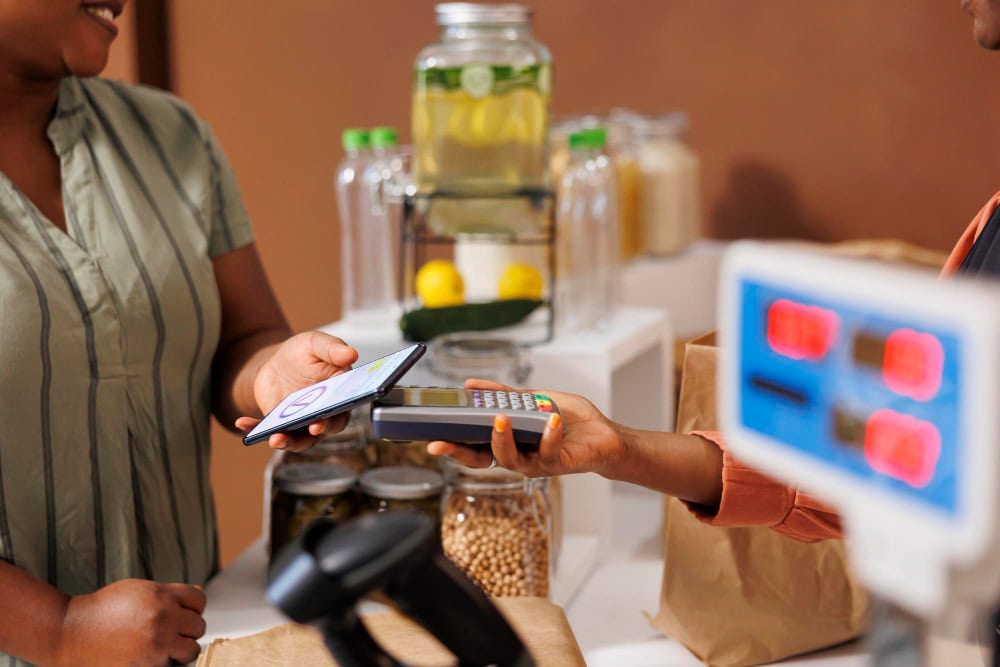
If you sell juice in Ghana and you are still taking payments into your personal MoMo wallet, you are not alone. Most juice businesses start that way. It feels convenient until the day it becomes expensive. A customer asks for a receipt you cannot produce. A staff member “helps you collect” and your figures start drifting. You cannot confidently separate capital from profit. Your daily sales look good, yet end of month you are somehow broke. The problem is not only bookkeeping. The problem is that your payment system is not built like a business. The fix is getting a business MoMo account for a juice business.
A proper business MoMo setup gives you clean records, clearer accountability, and a payment identity you can confidently put on flyers, stickers, menus, delivery bikes, and even invoices.
In Ghana, “business MoMo” usually means a merchant or business wallet issued by an Electronic Money Issuer (EMI) such as MTN MoMo, Telecel Cash (formerly Vodafone Cash), or AT Money (AirtelTigo Money). The Bank of Ghana’s framework also supports tiered and risk-based KYC structures, which is part of why businesses are asked for proper documents and operator details.
Let’s set it up properly, the way a serious juice brand should.
Step 1: Decide what “Business MoMo” means for your juice business
Before you register anything, get clear about the job your MoMo account must do.
If you run a juice stand, takeaways, or deliver around town, you mainly need a merchant account that customers can pay into easily, and that you can reconcile daily.
If you run beverage catering, supply offices, gyms, events, or supermarkets, you also want a setup that supports traceability, staff roles, and possibly a short code or merchant identifier that looks professional on documents and packaging. Telecel and Vodafone business onboarding commonly includes creating a unique short code for your business once KYC and agreements are completed.
If you plan to scale, your MoMo account must become part of your internal control system, not just a number customers send money to.
Step 2: Prepare your documents like a real operator
Here is what usually slows juice businesses down in Ghana: you want a business account, but your business identity is not arranged like a business yet.
Most merchant onboarding processes ask for business details, registration evidence, and the details of a responsible operator. Even older merchant registration forms show the pattern clearly: business details, responsible official details, and supporting IDs.
So before you step out, prepare a clean “Business MoMo folder”:
You want your business registration documents (sole proprietor or company), your TIN if available, a valid national ID (Ghana Card is the safest bet), and your operating location details. This is not bureaucracy for its own sake. The wallet is going to become a financial endpoint for your business, and the telcos must match it to a legitimate entity under Ghana’s KYC expectations.
If you are still operating informally, you can still start, but understand this: the more your volumes grow, the more painful it becomes to remain “informal” because payment controls and account limits eventually start fighting your growth.
Step 3: Choose the rail you want to build on
MTN MoMo Merchant / MoMo4Business
MTN has a dedicated merchant onboarding portal for MoMo Merchant and agent onboarding.
They also have a MoMo Business ecosystem that supports business tools like QR-based payment flows through the MoMo Business App experience.
What this means for a juice business:
If most of your customers are MTN users (often the case), an MTN merchant wallet is usually the fastest path to professional collections. Your next win after setup is to move your store to QR collection or a consistent merchant identifier, so staff are not randomly giving customers personal numbers.
Telecel Cash merchant registration (Telecel Ghana)
Telecel provides a merchant registration path through an online form flow for Telecel Cash merchant registration.
What this means for a juice business:
If your customer base includes many Telecel users, or you want to present multiple payment options as a serious brand, add Telecel Cash merchant registration into your stack.
Telecel business onboarding in Ghana is described as a staged process: you complete the business application form, submit KYC, sign agreements, and then Telecel Cash creates your business account and a unique short code and links the account based on the banking details you provide.
What this means for a juice business:
This is very useful for catering, corporate supply, and any model where you want payments to look “corporate” and traceable.
AT Money (AirtelTigo Money)
AT’s official site positions the ability to become a merchant or agent on their platform.
What this means for a juice business:
If your community has strong AirtelTigo usage, or you are building a wider net for convenience, you can add AT Money as an additional payment rail.
Step 4: Structure the account so it reduces theft, not increases it
A business MoMo account is not only about receiving money. It is about control. Here is the trap: some business owners register a merchant wallet, then still allow staff to operate it like a personal wallet. That defeats the point.
Instead, treat your MoMo as the front door of your cash system.
How a proper juice operator sets it up:
-
One public-facing merchant identity for customer payments (the number, short code, or QR).
-
One internal “cash-out rule” that defines who can withdraw, when, and why.
-
One daily reconciliation rhythm where you match MoMo inflows to cups sold, bottles delivered, or event contracts.
This is where pilfering collapses. Not because staff suddenly become angels, but because the system stops giving room for “storytelling”. When your payment identity is consistent, your sales tracking becomes consistent. When your sales tracking becomes consistent, profit stops disappearing. Read more about how to control pilfering in your juice business here.
Step 5: Do the brand work that makes people trust your number
In Ghana, customers are cautious. If your MoMo name pops up as a random personal name while your brand is “Kofi Juice Hene” or “FreshLife Juices”, it quietly reduces trust.
A merchant account helps because the registered business identity is clearer, and you can build your payment identity into your brand assets.
This is the part most juice businesses ignore, yet it affects conversion daily:
-
Put the MoMo identity on your menu card, sticker labels, event invoices, and WhatsApp catalogue
-
Use one standard wording for payments (example: “Pay by MoMo to [Merchant Name], then send screenshot”)
-
Train staff to never give personal numbers for sales
This is how you look like the kind of juice brand people recommend without thinking twice.
Step 6: Link your MoMo to your operations like a grown business
Once your merchant account is active, do not stop at “it works”. Make it operational.
Build these habits:
-
Daily close-out: confirm opening balance, total collections, refunds (if any), net inflow, closing balance.
-
Weekly review: match MoMo inflow patterns with your production cycles, so you can forecast fruit purchases and packaging.
-
Monthly separation: pay yourself deliberately, do not “dip” into MoMo like it is pocket money.
The goal is simple: your MoMo becomes a clean mirror of your sales engine.
Your Next Steps
If you want, I can help you set this up like a system, not like a random payment option.
Join Juicepreneurs Connect
If you are building a juice business in Ghana and you want real juicepreneur conversations, supplier talk, pricing realities, and systems that prevent losses, come inside. This is where we help each other grow with sense, not vibes.
Get the Juicepreneur Blueprint
If you are tired of guessing your way through pricing, packaging, workflow, compliance, and growth, the Blueprint gives you the full structure. It is built for Ghana, not generic internet advice.
Book a One-on-One Consultation
If you want me to look at your exact setup and help you build a clean payment, control, and sales system that fits your size and your goals, book a session. In one consultation, we can fix what has been leaking money for months.
For new juicepreneurs, I have put together what I call the must-read list of posts on this site to get you started on your business journey:
- Read about juicing equipment here.
- Read about the different types of pineapples here.
- Get beginner insight into beverage catering here.
- Read about record keeping in the juice business here.
- If you have already started beverage catering, read about costly mistakes to avoid here.
- Learn where to source PET bottles and other essentials here.
- Learn how to write a juice business plan here and here.
- Training new staff can be a headache, learn how to build a system to help you here.
- The Norwalk Juicer is a very fine machine, its not for everyone though. Learn more here.
- The juice business is heavily dependant on suppliers. Learn how to build a relaible network of supplier here.
- FDA compliance is a key metric in this business. Learn how to register your juice products with the FDA here
- Logistic is very vital in the juice busines, learn about it here.
- Lastly, read about how to price your beverage catering business here.