
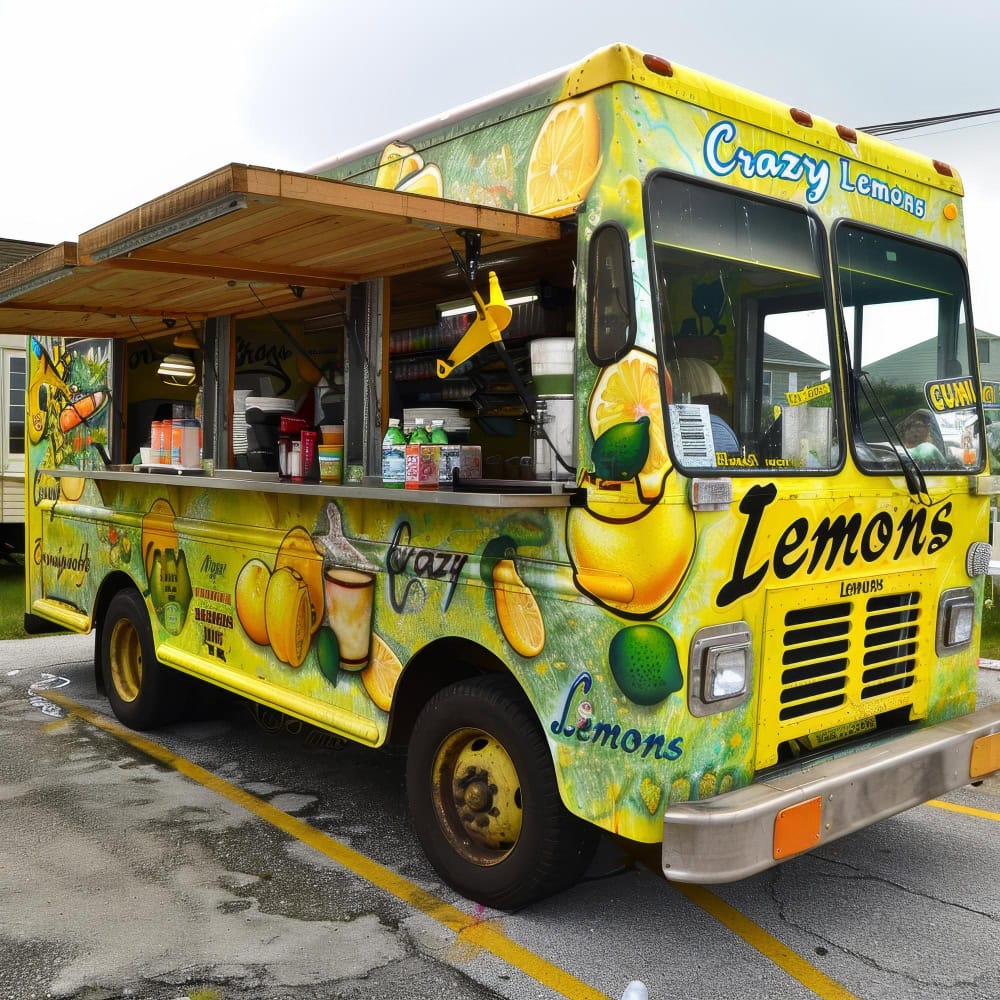
Part 2: Vehicle Choice and Professional Fit-Out
In Part 1 of this series; how to start a juice truck business in Ghana, we slowed down to explain and understand the concept of the juice truck business. Now we step into the heart of the project, the vehicle itself and how it is transformed into a clean, efficient, revenue-earning machine. This is the juice truck fit-out in Ghana post of the series.
Many people imagine that once the truck is bought, the hard part is over. The truth is the opposite. The purchase of the vehicle is only the beginning. The way the truck is converted will determine how easy your daily operations become and how seriously customers and regulators will take you.
A) Vehicle Cost: Choosing the Right Foundation
Your vehicle is not just transport. It is your kitchen, your shop front, your billboard, and your office all at once. For juicepreneurs looking at used box trucks, vans, or small commercial trucks, market listings commonly fall within: GH₵ 235,000 to GH₵ 375,000 for reliable models such as Kia Bongo variants or Hyundai Mighty-type trucks.
These vehicles are popular because they are:
-
strong enough to carry equipment weight
-
relatively easy to maintain locally
-
familiar to most mechanics
-
practical for city driving and event locations
If you decide on a refrigerated truck, the figures rise quickly. The cooling unit, insulation, and maintenance requirements add a significant layer of cost. This option makes sense for operators planning heavy bottled juice distribution, but for many startups it becomes an expensive luxury rather than a necessity.
When evaluating any vehicle, focus on:
Engine health rather than appearance.
Suspension strength for carrying equipment.
Availability of spare parts in your region.
Fuel consumption for daily routes.
Space layout potential for your intended workflow.
A beautiful but unreliable truck will turn your dream into a weekly headache.
B) Truck Conversion and Fit-Out: Where the Business Is Truly Built
This is the stage that separates a serious juice truck from a dressed-up vehicle. A proper conversion is not decoration. It is about hygiene, safety, workflow, and long-term durability.
What a premium fit-out must include
-
Stainless steel worktops and sink system
These surfaces are easy to clean and resistant to stains and corrosion. Plastic or wood may look cheaper, but they rarely survive real food operations. -
Water tanks and plumbing
Clean water for washing and waste water management are essential for compliance and daily operations. -
Interior panelling for hygiene control
The walls must be washable and sealed to prevent dust, insects, and moisture from becoming part of your production. -
Service hatch, awning, and exterior lighting
Customers should be served efficiently without stepping into your workspace. -
Storage cabinetry
Bottles, cups, fruits, and tools must have dedicated homes to prevent chaos during busy hours. -
Non-slip flooring
Safety is not optional when liquids are involved. -
Ventilation and basic extraction
Heat and humidity build up quickly inside food trucks in Ghana’s climate.
What this realistically costs
For a premium build in Ghana, you should plan for: GH₵ 60,000 to GH₵ 180,000
The range is wide because finishing quality changes everything. Imported fittings, custom stainless work, and professional plumbing push the price up. Cheaper builds often cut corners on materials that later cause rust, leaks, and hygiene issues.
Some fabricators advertise very low prices for food van builds. Those offers are tempting, but many of them exclude critical elements such as proper plumbing, electrical safety, or food-grade surfaces. The difference only becomes obvious after you begin operations. A juice truck is not the place for shortcuts.
Designing the Juice Truck for Real Ghanaian Operations
A good fit-out is not about copying foreign pictures. It is about matching the truck to how business actually happens here. Think about:
How you will operate during power outages.
Where staff will stand during rush hours.
Waste water disposal at events.
Fruits storage in heat.
How quickly the truck can be cleaned between locations.
If the design ignores these realities, the most beautiful truck will still struggle.
The Mindset Shift
At this stage many people realise something important. You are not buying a vehicle but building a mobile food facility. The goal is not to impress friends. The goal is to create a space where quality can be reproduced every single day without stress. When the foundation is right, everything that follows, menu, pricing, marketing, and customer experience, becomes easier.
This Is Where the Real Business Begins
At this stage, many people finally understand what a juice truck truly is. It is not a decorated vehicle or just a moving cooler with a logo. It is a mobile food facility that must operate with the same discipline as a well-run café or restaurant.
The way you choose your vehicle and fit it out will determine three things.
How easy it is to serve customers at speed.
How confident inspectors feel about your operation.
The level of stress you carry at the end of every working day.
A well-designed truck protects you. A poorly designed truck punishes you.
Before you rush to order equipment or design menus, pause here and respect this foundation. Get the shell right. Build the interior with hygiene and workflow in mind. Think about Ghana’s heat, power realities, traffic, and the way events actually run. When those factors are considered, your truck stops being an expense and starts becoming an asset.
Your Next Steps
If you are still reading at this point, it means you are not looking for a side hustle. You are thinking about a serious, premium juice business on wheels. That is a different path, and it deserves guidance, not guesswork.
Join Juicepreneurs Connect
Do not design a truck alone in your head. Inside the community you meet juicepreneurs who have already made these decisions, negotiated with fabricators, dealt with inspectors, and learned what works in Ghana’s streets and events. Real experiences save real money.
Join the Juicepreneurs Connect Community today!
Download the Juicepreneur Blueprint
A juice truck amplifies everything. Good systems become great profits. Weak systems become expensive mistakes. The Blueprint gives you the structure to design operations, record keeping, pricing, and compliance before the first bolt is tightened on your truck.
Download the Juicepreneur Blueprint today!
Book a One-on-One Strategy Session
If you are about to invest hundreds of thousands of cedis, a single clear conversation can protect you from years of regret. We will look at:
-
the right vehicle for your concept
-
a practical fit-out layout
-
compliance expectations
-
power and workflow planning
-
realistic budgets for Ghana
Build once. Build properly.
Book your Strategy Session today!
For new juicepreneurs, I have put together what I call the must-read list of posts on this site to get you started on your business journey:
- Read about juicing equipment here.
- Read about the different types of pineapples here.
- Get beginner insight into beverage catering here.
- Read about record keeping in the juice business here.
- If you have already started beverage catering, read about costly mistakes to avoid here.
- Learn where to source PET bottles and other essentials here.
- Learn how to write a juice business plan here and here.
- Training new staff can be a headache, learn how to build a system to help you here.
- The Norwalk Juicer is a very fine machine, its not for everyone though. Learn more here.
- The juice business is heavily dependant on suppliers. Learn how to build a relaible network of supplier here.
- FDA compliance is a key metric in this business. Learn how to register your juice products with the FDA here
- Logistic is very vital in the juice busines, learn about it here.
- Lastly, read about how to price your beverage catering business here.