
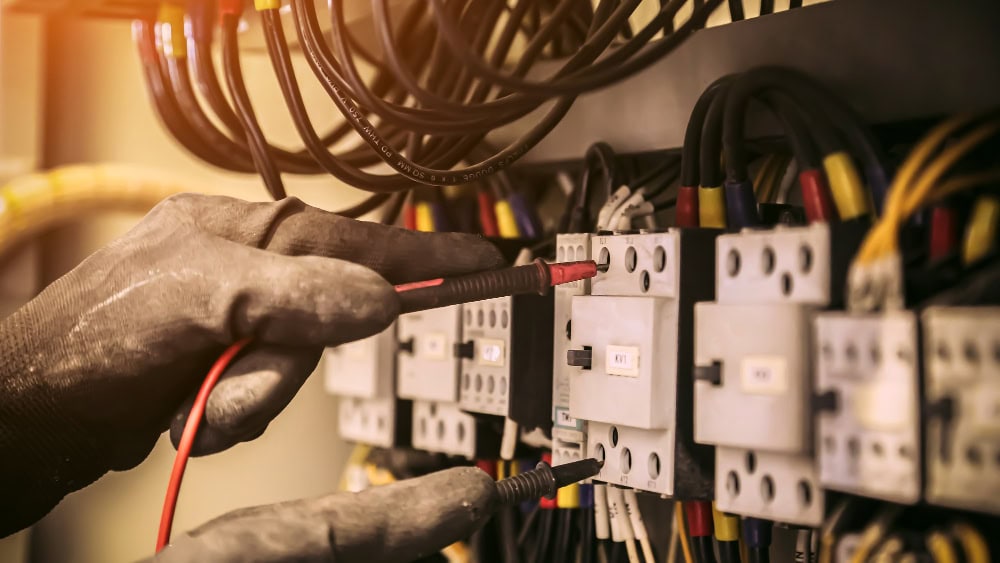
Most juicepreneurs in Ghana only discover the power gap when production is finally moving, then suddenly the lights start blinking, breakers trip, or a freezer starts misbehaving at the worst possible time. This is why utility load assessment must come before you add equipment, expand hours, or move into a bigger space. Are you planing to move from your home kitchen to a commercial space? Do well to read my post about when and how to move from a home kitchen to a commercial space.
The truth is simple: electricity problems rarely start as “no light.” They start as stress on wiring, overheated cables, weak protective devices, and risky shortcuts that people normalise because production has to continue.
This post shows you how to close the power gap safely by aligning three things: your real equipment load, compliant electrical installation, and ECG’s process for connection or additional load.
Why the Power Gap Shows Up When Your Business Is Doing Well
A home kitchen wiring setup is designed for domestic use, not commercial repetition. A blender, a juicer, a fridge, and light usage are one thing. But commercial juice production changes your power behaviour completely.
Cold-press machines draw sustained current. Chest freezers run all day. Refrigerators cycle constantly. Sealers, pumps, and lighting are now part of the baseline. You might even add a second freezer, then a third. The system can “work” while silently overheating.
And when a circuit is not sized for sustained demand, the danger is not only nuisance tripping. It is excessive temperature rise, degraded insulation, and increased fire risk. Ghana’s wiring regulations explicitly require conductors and equipment to be of suitable construction and size to prevent dangerous temperature rise and require circuits to be protected against excessive current using appropriate breakers or fuses.
What Utility Load Assessment Really Means in a Ghanaian Juice Setup
Utility load is not how many sockets you have. It is whether the electrical system can carry your real production demand safely, repeatedly, and predictably.
A proper utility load assessment is essentially a disciplined review of:
-
what you run (equipment list and ratings)
-
how you run it (simultaneous vs sequential use, peak hours, production days)
-
what your building can support (supply type, breaker capacity, wiring quality, earthing, isolation)
This matters because ECG supplies standard voltages in Ghana at 230V single phase and 400V three phase (±10%), and businesses often only realise they need an upgrade when they begin running equipment in parallel.
ECG and “Additional Load”: The Compliance Path Many Juice Businesses Miss
Here is the part that saves people from expensive delays.
ECG’s own procedure makes two things very clear:
-
Your electrical installation and maintenance should be done by a licensed electrician in line with wiring regulations, and you should demand and inspect the Energy Commission licence as required by law.
-
For new service connections (and in practice, many upgrades), ECG requires an Installation Completion Certificate signed by the licensed electrician, plus your ID and site plan. For non-residential customers, proof of business is required.
If you are moving from home scale into heavier equipment, the ECG concept you want to understand is Additional Load. ECG describes additional load as drawing additional lines to upgrade an existing single-phase service to a three-phase service and replacing the single-phase meter with a three-phase meter.
That is exactly the “power gap” moment many juicepreneurs hit: the business grows, the equipment grows, but the supply and installation remain domestic.
Wiring Compliance in Ghana: What the Law Actually Requires You to Do
To keep this safe and compliant, think of wiring compliance as a controlled process, not a “fix am quick” moment.
Ghana’s Electrical Wiring Regulations (L.I. 2008) set out minimum standards meant to protect lives and property. Some requirements that matter directly to a growing juice production setup include:
-
Electrical work must be undertaken by a certified electrician recognised by a licensed distribution utility or a person appointed by the Energy Commission.
-
You must obtain written approval from the distribution utility for alterations or adding additional fixed equipment that requires wiring alterations, and you must allow inspection/testing during and after the work.
-
Utilities should not supply electricity to premises unless the regulations are complied with, and utilities can disconnect supply if compliance requirements are not met.
-
Installations should be inspected and tested, with certificates and test results completed and signed by an authorised person.
So your compliance mindset is not “how do I connect machine A to socket B.” Your mindset is: who is certified, what is documented, what is tested, what is approved, and what is safe under continuous load.
Typical Power Consumption of Common Juice Production Equipment
When juice businesses begin adding equipment, power demand rarely increases in one dramatic step. It accumulates quietly. A freezer here, a stronger blender there, longer production hours, and suddenly the system is under pressure. The table below shows how common juice production equipment typically draws power and why utility load assessment becomes necessary earlier than most people expect.
Note: Actual power draw varies by brand, age, and usage pattern. Always confirm with the equipment nameplate and a licensed electrician before scaling.
| Equipment Type | Typical Power Rating (Watts) | Usage Pattern | What This Means for Your Wiring |
|---|---|---|---|
| Domestic Blender | 300 – 600 W | Short bursts | Usually manageable on home circuits when used alone |
| Commercial Blender | 1,200 – 2,200 W | Sustained during prep | Quickly stresses domestic wiring if used repeatedly |
| Slow Juicer / Cold-Press Machine | 800 – 1,500 W | Long, continuous runs | Requires stable supply and proper breaker protection |
| Chest Freezer (Medium) | 150 – 400 W | Runs 24/7 (cycles) | Adds constant background load many people forget |
| Upright Display Fridge | 250 – 600 W | Continuous | Heat buildup if circuit is undersized |
| Sealing Machine | 500 – 1,000 W | Intermittent but heavy draw | Often trips weak breakers when used with other equipment |
| Water Pump (Small) | 750 – 1,100 W | Intermittent surge load | Startup current can overload poor wiring |
| Lighting (LED Setup) | 50 – 200 W | Continuous during production | Small individually, significant when combined |
| Electric Kettle (if used) | 1,500 – 2,200 W | High surge | Should never share circuit with production equipment |
A Pro Tip That Saves Businesses: Stop Normalising Power Shortcuts
In Ghana, it is common to see extension boards become permanent infrastructure. It starts innocently: “let us just manage it for now.”
But when you begin commercial production, “manage it” becomes dangerous.
A compliant production setup should have:
-
safe isolation (so you can shut down sections of power quickly if needed)
-
protection devices that match the circuit load (breakers/fuses that protect, not just endure)
-
wiring and materials that are approved and appropriate for the environment and load
The reason this matters for juice businesses specifically is that your space often contains water, wet floors, cleaning routines, and cold storage. Electricity does not forgive those combinations when corners are cut.
How This Connects to Moving from Home Kitchen to a Commercial Space
When you are moving to a commercial juice space, many people assume the power problem automatically disappears because they are leaving the home kitchen. In reality, the move often exposes the problem, because your production becomes more parallel, your cold chain becomes heavier, and your equipment runs longer.
Closing the power gap with clarity and confidence
Electricity is not just a technical detail. It is the silent system that either supports your growth or quietly works against it. When power is planned properly, production becomes stable and predictable. When ignored, it introduces risk at the worst possible time.
Assessing utility load before you scale is not about fear. It is about protecting your people, your equipment, and the future you are building.
Join the Juicepreneurs Community
Inside the Juicepreneurs Community, juicepreneurs share real experiences about power failures, rewiring mistakes, cold-press load issues, freezer overloads, and working with electricians in Ghana. You learn what others discovered the hard way and how they stabilised their production without unnecessary expense. These shared lessons help you close the power gap before it becomes a crisis.
Book a One-on-One Consultation
If you want help assessing whether your current wiring can safely support your next phase, understanding what questions to ask an electrician, and aligning power readiness with your move from home production to a commercial space, a one-on-one consultation allows us to walk through your situation practically. The focus is clarity, not jargon, so you can make informed decisions with confidence.
Download the Juicepreneur Blueprint
The Juicepreneur Blueprint brings structure to scaling a juice business in Ghana. It connects power readiness, facility planning, SOPs, GMPs, FDA compliance, staffing systems, insurance, and long-term growth into one coherent framework. It is designed to help you scale deliberately, without hidden risks undermining your progress.
Growth should stretch you, not endanger you. Power planning keeps it that way.
For new juicepreneurs, I have put together what I call the must-read list of posts on this site to get you started on your business journey:
- Read about juicing equipment here.
- Read about the different types of pineapples here.
- Get beginner insight into beverage catering here.
- Read about record keeping in the juice business here.
- If you have already started beverage catering, read about costly mistakes to avoid here.
- Learn where to source PET bottles and other essentials here.
- Learn how to write a juice business plan here and here.
- Training new staff can be a headache, learn how to build a system to help you here.
- The Norwalk Juicer is a very fine machine, its not for everyone though. Learn more here.
- The juice business is heavily dependant on suppliers. Learn how to build a relaible network of supplier here.
- FDA compliance is a key metric in this business. Learn how to register your juice products with the FDA here
- Employing Staff can’t be avoided as you grow your business, learn how to build a staffing system that meets your needs and grows with your business here.
- Logistic is very vital in the juice busines, learn about it here.
- Learn how to start a juice truck business here.
- If you are just starting out and need a good but affordable slow juicer for your business. Check out the German Chef Slow Juicer.
- The food handler certification is a must for all your staff including yourself, learn how to secure them here.
- Lastly, read about how to price your beverage catering business here.